
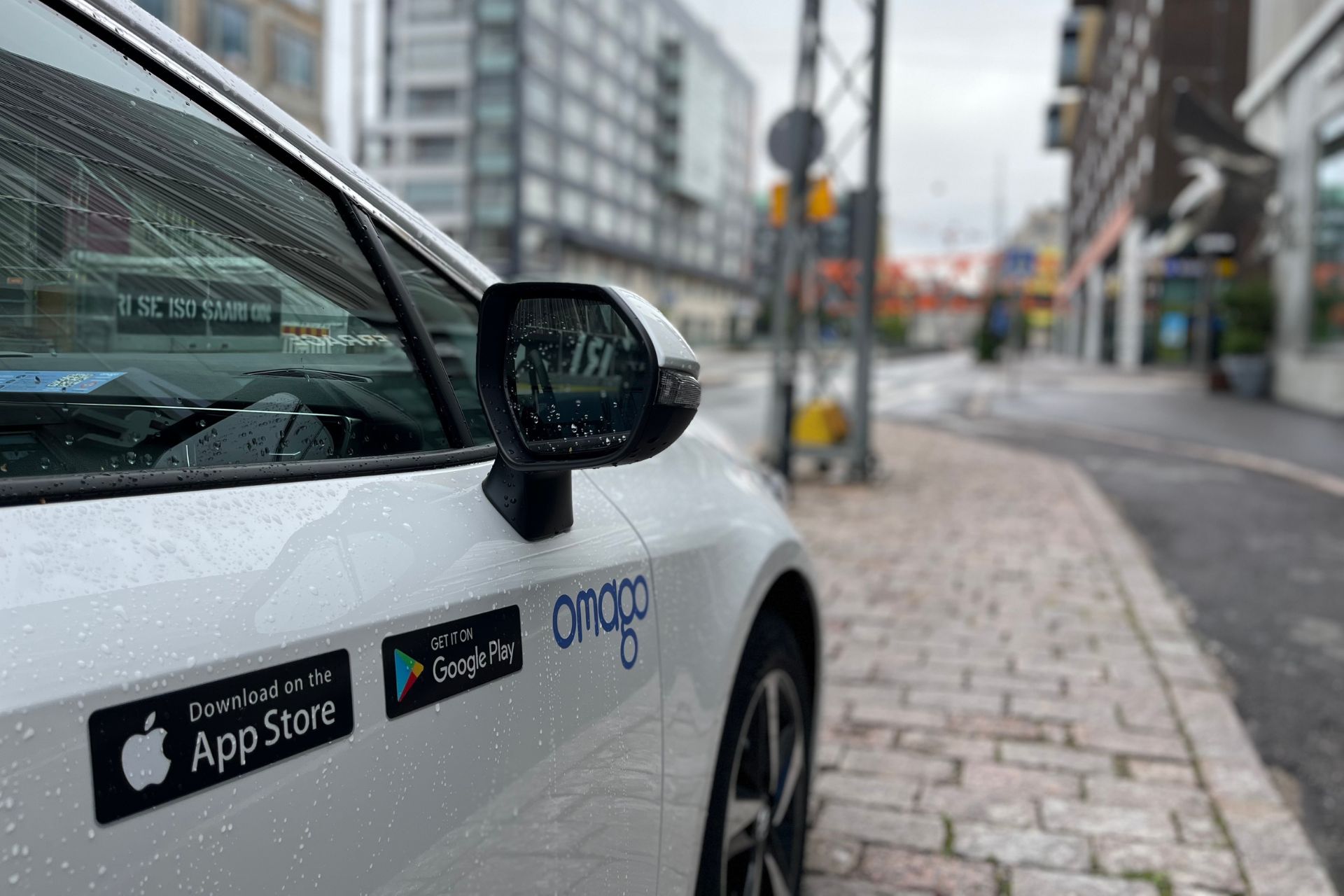
Car-sharing is a practical solution for many people when it comes to getting around. In Kalasatama, Omago offers car-sharing vehicles for rent both on the street and through housing associations.
Founded in 2017 Omago offers car-sharing vehicles throughout Finland. The reason for the service is simple: many people, especially in urban areas, prefer to rent a car rather than own one, which also supports more sustainable modes of transportation. Not all city dwellers want or are able to own a car, and as many as 30% of Omago’s customers have given up their cars thanks to the service.
In total, Omago has about 40 cars in Kalasatama and about 400 throughout Finland. The company was also among the first to adopt a service model in which housing cooperatives purchase cars from Omago for use by their own residents. Omago’s cars have been in use in Kalasatama since 2019.
“The service has been very well received in Kalasatama. It ranks among our most popular services, and there are dozens of cars in the area,” says Joel Virpi, Omago’s sales director.
Car-sharing offers numerous benefits
Virpi explains that car-sharing benefits both local residents and housing associations. For housing associations, the service is a great way to not only keep residents satisfied but also to boost their appeal, for example, in the rental market. They can purchase as many cars as they want from Omago for residents’ use.
“Individual housing complexes want to offer their residents better services. Car-sharing is an effective tool in this regard as well, since it ensures there are enough parking spaces in the area for those who need them,” he notes.
In addition to housing associations, Omago cars can also be rented on the street for local use. Cars are available in various models and sizes to suit people’s different needs.
Flexible service and ease of use
For residents, car-sharing offers practical benefits in particular. Aino Jääskeläinen, who lives in Kalasatama, is an active user of Omago’s services. Jääskeläinen doesn’t want to own a car herself and uses a shared car about once a week. She praises the service’s practicality. “Cars are almost always available. In the winter, you don’t have to dig a car out of the snow—you can just take it straight from the parking garage,” she notes.
Cars are reserved through the Omago app, and users can choose the car that suits them best from the selection. Jääskeläinen’s housing association has three cars in use: two electric cars and a hybrid. “I personally prefer electric cars. Car-sharing allows you to use an electric car without having to buy your own,” says Jääskeläinen.
“Car-sharing makes it possible to use an electric car without having to buy your own.”
— Aino Jääskeläinen, an Omago customer in the Kalasatama area
The costs of rental cars are also low compared to owning a car. Jääskeläinen has calculated that, by using Omago’s service, she saves about 300 euros a month compared to what she would pay for her own hybrid car. An Omago car can be rented starting at eight euros per hour, which also includes any fuel or charging costs at the car’s home base. For electric and hybrid cars, the only additional costs are for charging or refueling on longer trips. Housing associations pay a fixed monthly fee for the service.
Jääskeläinen strongly recommends that housing cooperatives consider acquiring shared cars, as they make residents’ lives significantly easier. “It’s great that we have companies developing solutions like this. Omago’s customer service has also been commendable,” Jääskeläinen concludes.